Cartoon Dogs Different Breeds, Funny Embroidery Review
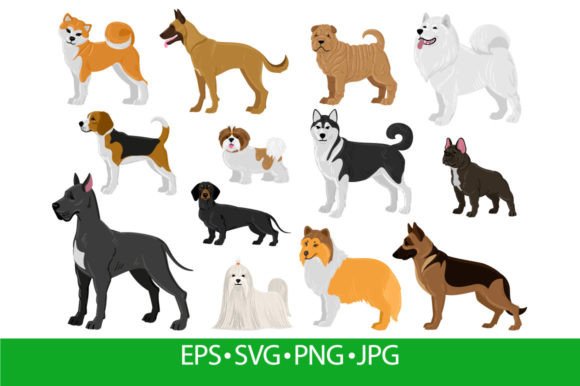
As a designer who spends more time staring at stitch density charts and fabric swatches than sleeping, I approach every new illustrations file with a healthy dose of skepticism. We have all been there: you find the perfect graphic, download it, send it to the hoop, and pray it doesn’t look like a muddy mess once the machine starts humming. Today, I am putting the Cartoon Dogs Different Breeds, Funny vector illustration set through its paces. This collection features a Husky, Beagle, Great Dane, French Bulldog, and Maltese, rendered in a cute, domestic puppy style. But does it translate well from screen to thread? Let’s dig into the practical realities of using this Graphics asset for real-world projects.
The First Impression: Mood and Visual Personality
When I first loaded the Cartoon Dogs Different Breeds, Funny design into my digitizing software, the immediate takeaway was charm without clutter. The vector lines are clean, which is a huge relief. Too often, "cute" cartoon designs suffer from excessive detail that gets lost in embroidery. Here, the shapes are bold enough to hold their identity even when simplified into stitches. The mood is undeniably lighthearted and playful. It screams comfort. Whether it is a French Bulldog with those signature bat ears or a Maltese with fluffy contours, the visual personality is consistent across the set.
This isn’t just a random assortment of animals; it feels like a cohesive brand asset. For an Etsy seller or a small shop product owner, this consistency is gold. You can mix and match these breeds on different items—a Beagle on a baby onesie, a Husky on a tote bag—and they still feel like they belong to the same family. That level of brand cohesion builds trust with buyers who are looking for curated, handmade goods rather than generic clip-art applications.
Real-World Application: From Screen to Stitch
Let’s talk about how this machine embroidery design performs in actual production scenarios. I recently considered using the Great Dane and French Bulldog vectors for a line of custom aprons for a local bakery client. The contrast between the large, imposing shape of the Great Dane and the compact, squishy form of the Frenchie offers great variety in placement. On a standard chest pocket area, the smaller breeds like the Beagle or Maltese would shine. They don’t require massive hooping areas, making them versatile for various garment sizes.
I also envision this embroidery project working beautifully for holiday gifts. Imagine a set of matching tea towels featuring the Husky and the Beagle, stitched in warm autumn tones. The simplicity of the cartoon style allows for creative thread colors. Because the original vectors are simple, you aren’t locked into specific shading techniques. You can use solid fills for a modern look or add subtle texture stitches to give the fur a bit of dimension. This flexibility is crucial for custom apparel where you might need to match the dog’s color to a customer’s preferred palette.
For boutique branding, these designs work exceptionally well as embroidered patches. A small, single-breed patch on a denim jacket or a canvas backpack adds a touch of whimsy without overwhelming the base material. The clean lines ensure that even at smaller scales, the breed characteristics remain recognizable. A buyer should be able to tell it is a Dalmatian-spotted pattern (if included) or a distinct snout shape immediately. Clarity is king in embroidery, and this set delivers on that front.
Where to Exercise Caution
No design is perfect, and there are specific contexts where Cartoon Dogs Different Breeds, Funny requires careful handling. If you plan to embroider these on stretchy fabrics like thin jersey knits for baby clothes, you must be vigilant about stabilization. Cartoon graphics often rely on smooth outlines. If the fabric puckers, those cute curves become wavy and distorted. Always test on scrap fabric first to ensure your stabilizer choice matches the weight and stretch of your final material.
Furthermore, consider the hoop size limitations. While the individual dogs are likely manageable, if you attempt to stitch multiple breeds together in a large cluster, you might run into edge-of-hoop issues. Additionally, avoid placing these designs on highly textured fabrics like heavy bouclé wool or rough burlap. The definition of the cartoon features will get lost in the weave of the fabric. Dark fabrics can also be tricky; if the vector relies on white space for separation, you may need to add a backing or light-colored underlay to prevent the design from blending into the background. Finally, be mindful of tiny details. If the original vector includes whiskers or eye highlights that are less than 1mm, they will not survive the stitching process. Simplify these elements before digitizing or converting the file.
Stitch Density and Technical Considerations
One of the most critical aspects of any digital embroidery file is stitch density. Cartoon styles can sometimes tempt designers to overfill areas, leading to stiff, bulky embroidery that feels more like plastic than fabric. When evaluating this set, I looked for balance. The fill stitches should be dense enough to cover the base fabric completely but loose enough to allow the thread to lay flat. If the design uses satin stitches for outlines, check that they are not so tight that they cause the fabric to pucker around the edges of the dog shapes.
Another technical note involves the transition between different stitch types. A good embroidery design will move smoothly from a running stitch for details to a fill stitch for the body. If the file conversion results in jagged transitions, the finished product will look amateurish. I recommend inspecting the design in black and white mockups to check for contrast and clarity. Sometimes, color masks can hide structural flaws in the digitizing. By viewing the design monochromatically, you can see if the stitch paths make logical sense and if the design will hold its shape after washing.
Commercial Viability and Customer Appeal
From a business perspective, Cartoon Dogs Different Breeds, Funny has strong potential. Dog lovers are a passionate demographic, and personalized gifts featuring specific breeds perform well in the craft business market. A customer who owns a Maltese is far more likely to buy a shirt with a Maltese on it than a generic paw print. This specificity drives engagement and increases the perceived value of the finished product.
However, always confirm licensing terms before selling finished items. Even though this is a high-quality design assets pack, commercial rights vary. Ensure you are allowed to sell physical goods made from these files. If you are creating printable mockups or digital previews, the usage rights may differ from those for physical embroidery. Transparency with your customers about the origin and quality of your designs helps build long-term loyalty. When a buyer sees that you care about stitch quality, proper stabilization, and thoughtful design application, they are more likely to return for future purchases.
Final Verdict
In conclusion, the Cartoon Dogs Different Breeds, Funny vector set is a solid addition to any creative entrepreneur’s library. It offers versatility, charm, and broad appeal. It works well for holiday embroidery, personalized gifts, and everyday wearables. Just remember to respect the technical limits of embroidery. Test your stabilizer, choose your thread colors wisely, and keep an eye on the stitch density. When executed correctly, these cute breeds will bring joy to both the maker and the recipient, turning a simple piece of fabric into a memorable keepsake.